

By: Micki Vandeloo, President, Lakeview Consulting
When I tell people that I own a grant consulting business for the business and manufacturing communities, many people ask, “What exactly is that?”. Then, I tell that about 10% of the job is writing, 50% of the job is project management and the other 40% is education. In other words, I spend a LOT of time educating potential clients and conference attendees about grants.
The reason for this is that most for-profit companies don’t know where to find grants to fund their success, and, even if they did, they don’t have the resources (time, knowledge, or people) to develop applications to get the funding. This article will explain how to find apply for business grants to help readers understand the process behind what we do.
How to Find Business Grants
One of the problems with business grants is that they are well-hidden. There are a couple of ways to find business grants:
- Use a search engine such as Google to search for business grants. Since most business grants come from state sources, the most appropriate search term is “business grants, [state where your business is located], [type of grant such as equipment purchase, recycling, or training]”.
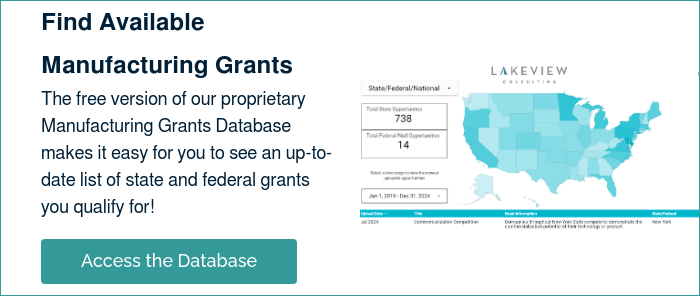
- Sign up for the Free Manufacturing Grants Database. While this database is geared toward manufacturing grants, many of the grants in the database are open to all for-profit businesses. If you want more information on grants that may be available, there is also the option to upgrade to the Premium Grants Database for $25/month.
How to Apply for Business Grants
Once you have found a grant or grants to support your growth initiatives, then what do you do? Here is a step-by-step guide to applying for grants:
Step 1: Review the funding opportunity (usually on the grant website) and make sure you are eligible (there should be a section titled Eligible Applicants).
Step 2: Review the funding opportunity carefully to identify the funder’s goals for the funding and make sure your project fits what the funder wants to support. You can also review previously funded projects to gauge alignment.
Step 3: Review the funding opportunity again to highlight important statements, including required page count, deadline, any webinars on the funding opportunity, eligible and ineligible costs, narrative requirements, portal registration, the scoring criteria (often presented as a table), and reporting requirements.
Step 4: Create a team of your company’s key employees (financial, operations and any other departments that will be involved in the proposed projects) as well as any key suppliers and send them the funding opportunity with your notes and highlights.
Step 5: Schedule an internal kickoff meeting to discuss the opportunity and create a timeline for receipt of information, portal registration and application development, working backwards from the deadline. It is also a good idea to schedule regular update meetings with the same team to address any roadblocks to application completion and provide a chance for answering any questions the team might have.
Step 6: Once the application is drafted, have a person not on the grant team review the application. This “external” reviewer will have a clearer view of the application as they have not been involved in the application process.
Step 7: After review of the application and addressing any edits required, you can submit the application as outlined in the funding opportunity document.
Now you wait for the funding decision! Once you are awarded the grant, there will likely be a grant agreement that you will have to sign and then the reporting starts.
If you are confident in your organization’s ability to perform the steps above, you can start your grant journey at any time. If, however, you are like many of my clients, you will need help either with finding or accessing grants. If you are in this latter group, please contact me so we can discuss our approach and find a service that fits your company’s needs.
Frequently Asked Questions About Business Grants
How do I find business grants for my company?
Finding business grants starts with identifying programs that match your industry, location, business size, and project goals. Federal, state, local, and private grant programs all have different eligibility requirements. Instead of applying for every opportunity available, focus on grants that closely align with your planned investments, workforce development initiatives, equipment purchases, research projects, or expansion goals. Targeted research can help businesses identify the opportunities that offer the highest likelihood of success.
Where can I search for business grants?
Businesses can search for grants through federal and state government databases, industry associations, economic development organizations, and specialized grant research services. Many grant opportunities are industry-specific and may not appear in general internet searches. A structured grant search process can help uncover funding opportunities that are relevant to your business and growth plans.
What do I need before applying for a business grant?
Before applying for a business grant, you should have a clear understanding of your project, funding needs, expected outcomes, and budget. Many grant programs also require business registration information, financial documents, and a detailed project plan. Preparing these materials in advance can help streamline the application process and improve the quality of your submission.
How do I know if my business qualifies for a grant?
Every grant program has unique eligibility requirements. Some grants are limited to specific industries, business sizes, geographic locations, or project types. Reviewing eligibility criteria before investing time in an application is one of the most important steps in the grant process. Businesses that focus on opportunities aligned with their goals and qualifications typically achieve better results than those applying broadly.
Can I get help finding and applying for business grants?
Yes. Many businesses work with grant consultants or grant writers to identify funding opportunities, evaluate eligibility, and develop competitive applications. Professional guidance can help businesses avoid pursuing grants that are unlikely to be funded while improving the quality and competitiveness of their submissions. Lakeview Consulting helps businesses research grant opportunities, assess funding fit, and develop grant application strategies designed to support long-term growth.